
Introduction
Quantity takeoff in construction is the process of measuring and calculating the exact quantities of materials required for a construction project. Contractors analyze construction drawings and specifications to determine how much concrete, steel, lumber, drywall, and other materials are needed.
Accurate quantity takeoffs are essential for preparing reliable project estimates and competitive bids. When material quantities are incorrect, project budgets can quickly exceed expectations, leading to delays and profit loss.
Understanding the quantity takeoff process helps contractors improve cost control, reduce waste, and prepare more accurate bids. This guide explains how construction quantity takeoffs work, the steps involved, and why professional takeoff services are valuable for contractors.
What Is Quantity Takeoff in Construction?
Quantity takeoff in construction refers to the detailed calculation of all materials required to complete a project. Estimators review construction drawings and measure each component of the project to determine material quantities.
A typical construction quantity takeoff includes measurements for:
- Concrete volume
- Steel reinforcement weight
- Lumber quantities
- Drywall square footage
- Roofing materials
- Flooring materials
- Electrical and plumbing components
These quantities are later used to calculate material costs during the estimating phase.
Many contractors rely on professional quantity takeoff services to produce accurate material calculations before submitting project bids.
Why Quantity Takeoffs Are Critical for Construction Projects
A detailed construction material takeoff plays a key role in project planning and cost control.
Accurate Project Cost Estimates
Material quantities directly affect project costs. If quantities are incorrect, cost estimates will also be inaccurate.
Competitive Contractor Bidding
Contractors must submit bids that are competitive but still profitable. A reliable takeoff ensures all material costs are included.
Better Procurement Planning
Knowing material quantities allows contractors to plan procurement schedules and avoid shortages.
Reduced Material Waste
Precise calculations reduce over-ordering and unnecessary material waste on job sites.
Professional contractors often combine takeoffs with construction cost estimating services to prepare accurate project budgets.

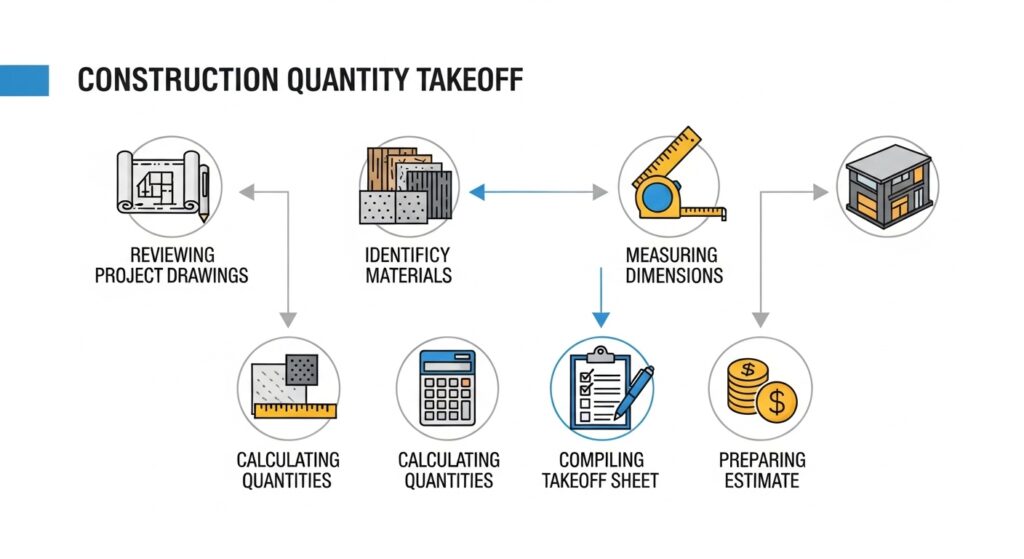
The Quantity Takeoff Process Step by Step
The quantity takeoff process follows a structured workflow used by construction estimators.
Step 1: Review Construction Drawings
Estimators carefully examine architectural, structural, and MEP drawings to understand the project scope.
Documents typically reviewed include:
- Architectural plans
- Structural drawings
- Electrical layouts
- Mechanical plans
- Project specifications
Step 2: Identify Construction Components
Each building element is identified and categorized, such as:
- Foundations
- Structural framing
- Walls and partitions
- Roofing systems
- Flooring finishes
Step 3: Measure Material Quantities
Estimators measure quantities using scale drawings or digital software.
Examples include:
- Concrete measured in cubic yards
- Steel measured in tons
- Drywall measured in square feet
- Lumber measured in board feet
Step 4: Organize Quantities by Trade
Material quantities are grouped by construction trade, such as:
- Concrete
- Masonry
- Structural steel
- Carpentry
- Mechanical
- Electrical
Step 5: Prepare the Material Takeoff Report
The final takeoff report includes a detailed breakdown of materials required for the project.
Contractors frequently use material takeoff services to generate these reports quickly and accurately.
Manual vs Digital Quantity Takeoffs
Contractors can perform takeoffs manually or using digital estimating tools.
| Method | Accuracy | Speed | Best Use |
|---|---|---|---|
| Manual Takeoff | Medium | Slow | Small projects |
| Spreadsheet Takeoff | Medium | Moderate | Basic estimating |
| Digital Takeoff Software | High | Fast | Large projects |
| Professional Takeoff Services | Very High | Fast | Contractor bidding |
Manual Takeoffs
Traditional takeoffs involve measuring printed construction drawings using scale rulers.
Digital Takeoffs
Modern estimators use software such as:
- PlanSwift
- Bluebeam
- CostX
- On-Screen Takeoff
Digital tools allow estimators to measure drawings directly on-screen, significantly improving speed and accuracy.
Common Materials Included in Construction Takeoffs
A material takeoff construction report usually includes the following materials.
Concrete Materials
- Concrete volume
- Formwork
- Reinforcement steel
Structural Materials
- Steel beams
- Columns
- Structural connections
Architectural Materials
- Drywall
- Insulation
- Flooring
- Roofing materials
Mechanical and Electrical Components
- HVAC equipment
- Piping systems
- Electrical conduits
- Wiring quantities
Detailed takeoffs allow contractors to estimate costs and prepare accurate procurement plans.

Benefits of Outsourcing Construction Takeoff Services
Many contractors outsource construction takeoff services to specialized estimating companies.
Faster Bid Preparation
Professional estimators can complete detailed takeoffs quickly, helping contractors meet tight bid deadlines.
Higher Accuracy
Experienced estimators use advanced software and cost databases to produce reliable material calculations.
Reduced Estimating Workload
Outsourcing allows contractors to focus on project management and operations.
Improved Bid Success Rate
Accurate estimates increase the chances of winning profitable construction projects.
Companies like Phoenix Estimations provide commercial estimating services and residential estimating services to support contractors across multiple project types.
Conclusion
Quantity takeoff in construction is a fundamental step in the estimating process that determines how much material a project requires. By carefully reviewing drawings, measuring material quantities, and organizing costs by trade, estimators create accurate material calculations that support reliable project budgets.
Contractors who use structured takeoff processes, digital estimating tools, and professional takeoff services can significantly improve bid accuracy, reduce material waste, and increase project profitability.
FAQ Section
What is quantity takeoff in construction?
Quantity takeoff in construction is the process of calculating the exact quantities of materials required for a building project based on construction drawings and specifications.
What is included in a construction quantity takeoff?
A construction quantity takeoff typically includes materials such as concrete, steel, lumber, drywall, insulation, flooring, and roofing components.
What tools are used for quantity takeoffs?
Common tools include PlanSwift, Bluebeam, CostX, and On-Screen Takeoff software, which allow estimators to measure quantities directly from digital drawings.
Why is the quantity takeoff process important?
The quantity takeoff process ensures accurate material calculations, allowing contractors to prepare reliable cost estimates and competitive bids.
Do contractors outsource construction takeoff services?
Yes. Many contractors outsource construction takeoff services to professional estimating companies to save time and improve estimate accuracy.
Resources
U.S. Bureau of Labor Statistics
https://www.bls.gov
National Institute of Building Sciences
https://www.nibs.org
Construction Industry Institute
https://www.construction-institute.org
Engineering News-Record
https://www.enr.com
Author Bio
Phoenix Estimations Team
Phoenix Estimations is a professional construction cost estimating company providing quantity takeoff, material takeoff, and estimating services for contractors, developers, and architects across North America. Our expert estimators help construction professionals prepare accurate bids, reduce cost overruns, and improve project planning.