
Introduction
How to estimate construction costs is one of the most important skills for contractors, developers, and construction professionals. A construction estimate calculates the total cost of materials, labor, equipment, and overhead required to complete a project.
Accurate construction estimates help contractors submit competitive bids and maintain profitable projects. When estimates are incorrect, projects can experience budget overruns, delays, and financial losses.
Understanding the construction cost estimation process allows contractors to prepare reliable budgets and manage project expenses effectively. This guide explains step-by-step how to estimate construction costs for residential, commercial, and infrastructure projects.
What Is Construction Cost Estimation?
Construction cost estimation is the process of calculating all expenses required to complete a construction project.
A typical estimate includes:
- Material costs
- Labor costs
- Equipment expenses
- Subcontractor costs
- Overhead costs
- Profit margins
Professional estimators analyze project drawings and specifications to determine accurate quantities and costs.
Many contractors rely on construction cost estimating services to prepare detailed estimates for bidding and budgeting.
Step-by-Step Process: How to Estimate Construction Costs
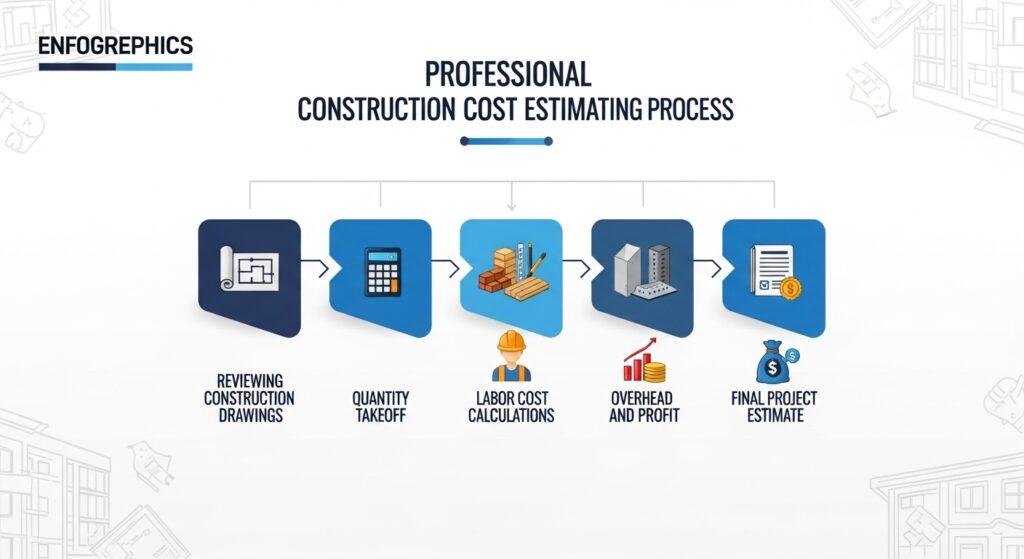
Contractors follow a structured workflow to estimate project costs accurately.
Step 1: Review Construction Drawings and Specifications
Estimators start by reviewing all construction documents to understand the project scope.
Important documents include:
- Architectural drawings
- Structural plans
- Mechanical and electrical drawings
- Project specifications
Careful review ensures that all project components are included in the estimate.
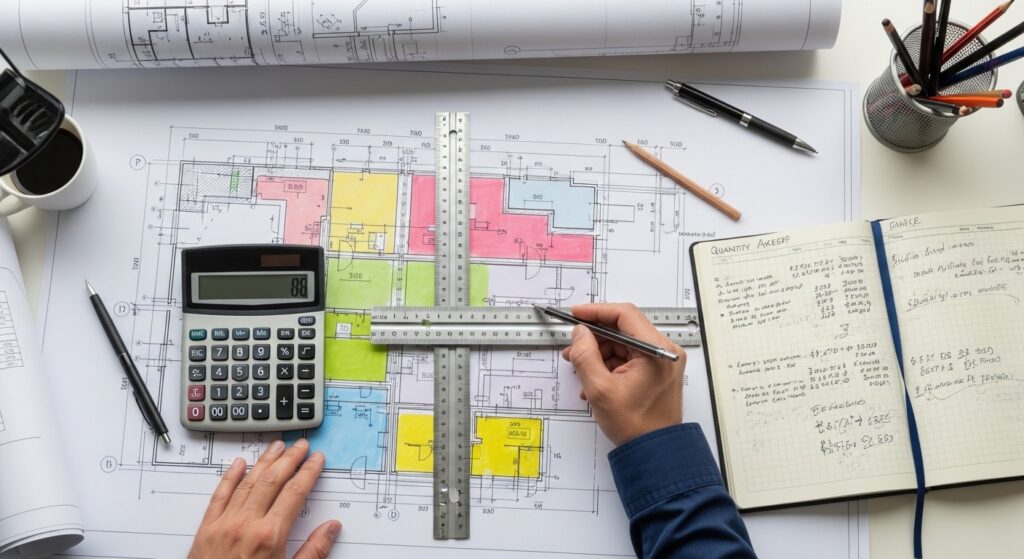
Step 2: Perform a Quantity Takeoff
A quantity takeoff calculates the exact amount of materials required for the project.
Examples include:
- Concrete measured in cubic yards
- Steel reinforcement measured in tons
- Drywall measured in square feet
- Lumber measured in board feet
Many contractors use professional quantity takeoff services to speed up this process and improve accuracy.
Step 3: Calculate Material Costs
After quantities are determined, estimators assign costs to each material.
Material pricing may come from:
- Supplier quotes
- Cost databases
- Historical project data
A detailed material takeoff services report helps contractors track material requirements accurately.
Step 4: Estimate Labor Costs
Labor is one of the largest construction expenses.
To estimate labor costs, contractors must calculate:
- Crew size
- Productivity rates
- Hourly wages
- Project duration
Example Labor Calculation
| Activity | Crew Size | Hours | Hourly Rate | Total Cost |
|---|---|---|---|---|
| Concrete placement | 5 workers | 40 hrs | $45 | $9,000 |
| Framing work | 4 workers | 60 hrs | $40 | $9,600 |
| Drywall installation | 3 workers | 50 hrs | $35 | $5,250 |
Total Labor Cost = $23,850
Understanding how to estimate labor costs for construction ensures accurate project budgets.
Step 5: Estimate Equipment and Site Costs
Estimators must include construction equipment expenses.
Common equipment costs include:
- excavators
- cranes
- loaders
- generators
- scaffolding
These costs are part of how to estimate construction site costs accurately.
Step 6: Add Overhead and Profit
Overhead includes expenses that support the project but are not directly tied to construction work.
Examples include:
- project management
- office costs
- insurance
- permits
Contractors also add a profit margin to determine the final project bid.
Methods Used to Estimate Construction Costs
Contractors use several estimating methods depending on project stage and available data.
| Estimating Method | Accuracy | Best Use |
|---|---|---|
| Square Foot Estimating | Medium | Early project planning |
| Unit Cost Estimating | High | Budget estimates |
| Detailed Takeoff Estimating | Very High | Contractor bidding |
| Assembly Estimating | High | Trade-specific estimates |
Square Foot Estimating
Used for early cost projections based on building size.
Example:
$200 per square foot × 3,000 sq ft = $600,000 estimated cost
Detailed Takeoff Estimating
This is the most accurate method because it calculates every material and labor requirement.
Professional commercial estimating services and residential estimating services often use this method.
Estimating Construction Costs for Different Project Types
Estimating New Home Construction Costs
When estimating a house or residential project, contractors must consider:
- foundation work
- framing materials
- roofing systems
- plumbing and electrical systems
- finishing materials
These factors determine how to estimate new home construction costs accurately.
Estimating Commercial Construction Costs
Commercial projects involve additional factors such as:
- structural steel
- HVAC systems
- fire protection systems
- elevators
- large mechanical installations
These projects typically require detailed cost estimating methods.
Tools Used to Estimate Construction Costs
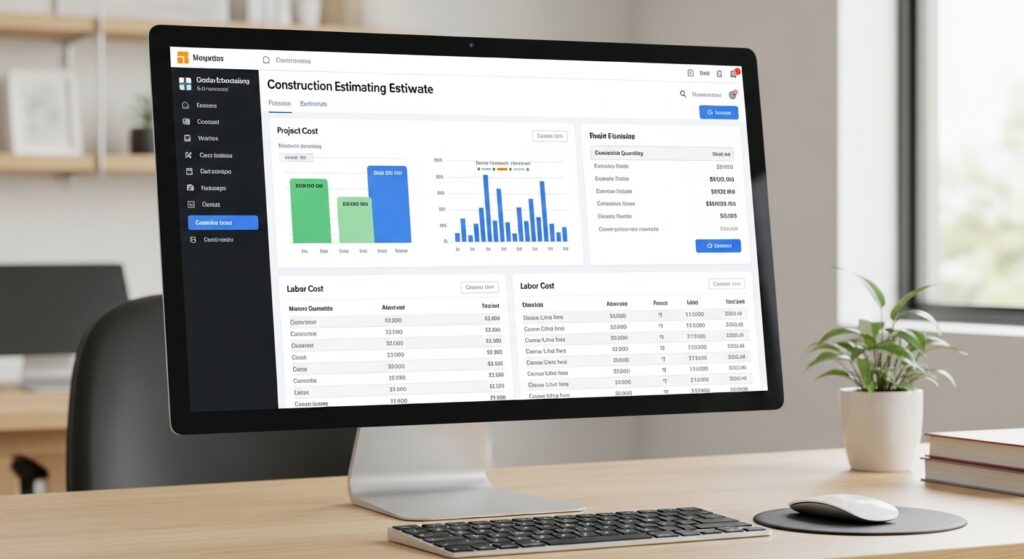
Modern contractors use digital tools to improve estimating accuracy.
Popular estimating tools include:
- PlanSwift
- Bluebeam
- CostX
- STACK
- RSMeans
These tools allow estimators to perform digital takeoffs and cost calculations quickly.
However, many contractors still outsource estimating tasks to experienced estimators for complex projects.
Common Mistakes When Estimating Construction Costs
Contractors should avoid these common errors:
- Missing materials during quantity takeoffs
- Using outdated material prices
- Underestimating labor productivity
- Ignoring indirect costs
- Rushing the estimating process
Accurate estimates require careful analysis of project scope and cost data.
Conclusion
Understanding how to estimate construction costs is essential for contractors preparing project bids and managing budgets. The estimating process includes reviewing drawings, performing quantity takeoffs, calculating material and labor costs, and adding overhead and profit.
Contractors who follow structured estimating methods and use modern estimating tools can significantly improve estimate accuracy and project profitability.
Professional estimating support can further enhance bid preparation and reduce the risk of costly estimating errors.
FAQ Section
How do contractors estimate construction costs?
Contractors estimate construction costs by reviewing project drawings, performing quantity takeoffs, calculating material and labor costs, and adding overhead and profit margins.
What is the first step in estimating construction costs?
The first step is reviewing construction drawings and project specifications to understand the project scope.
How do you estimate labor costs for construction?
Labor costs are estimated by calculating crew size, productivity rates, hourly wages, and the total hours required to complete each task.
What is the most accurate method to estimate construction costs?
Detailed quantity takeoff estimating is the most accurate method because it calculates the exact materials and labor required.
Why is accurate construction cost estimating important?
Accurate estimating helps contractors prepare competitive bids, control project budgets, and avoid financial losses during construction.
Resources
U.S. Bureau of Labor Statistics
https://www.bls.gov
National Institute of Building Sciences
https://www.nibs.org
Construction Industry Institute
https://www.construction-institute.org
Engineering News-Record
https://www.enr.com
Author Bio
Phoenix Estimations Team
Phoenix Estimations is a professional construction cost estimating company providing quantity takeoff, material takeoff, and estimating services for contractors, developers, and architects across North America. Our expert estimators help construction professionals prepare accurate bids, reduce cost overruns, and improve project planning.