
Introduction
Construction cost estimating is the process of calculating the total cost required to complete a construction project. It includes estimating materials, labor, equipment, subcontractor costs, overhead, and profit before a project begins.
Accurate cost estimates are essential for contractors preparing competitive bids and maintaining profitable projects. A poorly prepared estimate can lead to budget overruns, schedule delays, and financial losses.
This guide explains how construction cost estimating works, the methods contractors use, and the tools professionals rely on to produce accurate estimates.
What Is Construction Cost Estimating?
Construction cost estimating is the systematic calculation of all expenses required to build a project. These costs typically include:
- Materials
- Labor
- Equipment
- Subcontractors
- Overhead
- Profit margin
Estimators analyze construction drawings, specifications, and project scope to determine the quantities and costs of each component.
Many contractors rely on professional construction cost estimating services to prepare detailed estimates for bidding and budgeting.
Key Components of a Construction Estimate
A typical estimate includes:
1. Direct Costs
- Materials
- Labor
- Equipment
- Subcontractor work
2. Indirect Costs
- Project management
- Site supervision
- Temporary facilities
3. Overhead and Profit
- Company overhead
- Risk contingency
- Profit margin
Accurate estimates ensure contractors submit bids that cover all expenses while remaining competitive.
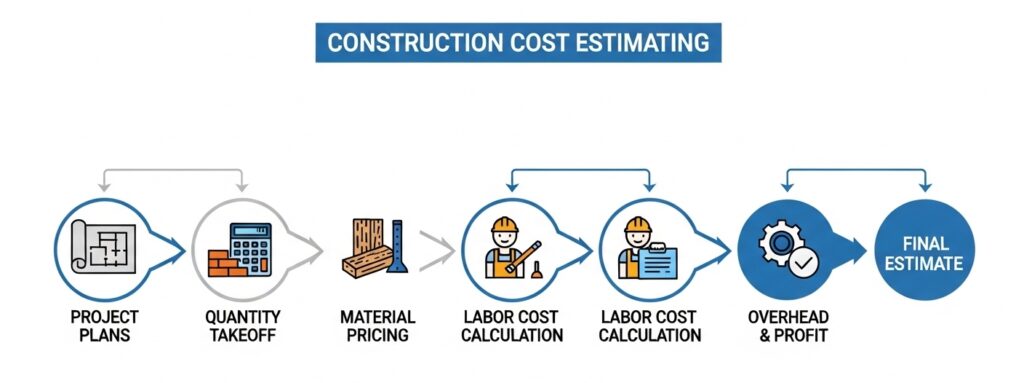
The Construction Cost Estimating Process
Professional estimators follow a structured process to produce reliable project budgets.
Step 1: Review Construction Drawings
Estimators analyze architectural, structural, and mechanical drawings to understand the full project scope.
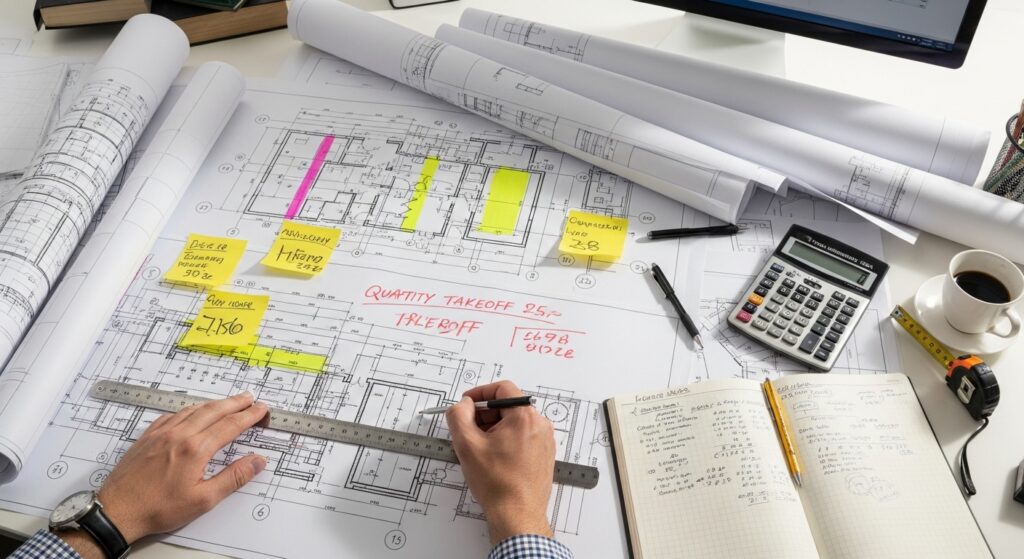
Step 2: Perform Quantity Takeoffs
A quantity takeoff calculates the exact amount of materials required.
Examples include:
- Concrete volume
- Steel reinforcement weight
- Drywall square footage
- Lumber quantities
Many contractors outsource quantity takeoff services to speed up the estimating process.
Step 3: Calculate Material Costs
Material pricing is determined using supplier quotes, historical data, or estimating databases.
Step 4: Estimate Labor Costs
Labor estimates include:
- crew size
- productivity rates
- hourly wages
- project duration
Step 5: Add Equipment and Subcontractor Costs
Costs for specialized work such as electrical, plumbing, or HVAC are added to the estimate.
Step 6: Include Overhead and Profit
Finally, estimators include overhead costs and profit margins to determine the final bid price.
Common Construction Cost Estimating Methods
Contractors use different estimating methods depending on the project stage and available information.
| Estimating Method | Accuracy | Speed | Best Used For |
|---|---|---|---|
| Preliminary Estimate | Low | Fast | Early project planning |
| Square Foot Estimate | Medium | Fast | Budget planning |
| Unit Cost Estimate | High | Moderate | Detailed estimates |
| Detailed Takeoff Estimate | Very High | Slower | Contractor bidding |
Preliminary Estimates
Used during early planning stages when only limited project information is available.
Square Foot Estimating
Costs are estimated based on price per square foot.
Example:
Commercial building cost = $200 per square foot × building size
Unit Cost Estimating
Each construction component has a unit price.
Examples:
- Concrete per cubic yard
- Steel per ton
- Drywall per square foot
Detailed Estimating
This is the most accurate method. It involves full material takeoffs and labor calculations.
Professional material takeoff services often support this process.
Construction Estimating Software and Tools
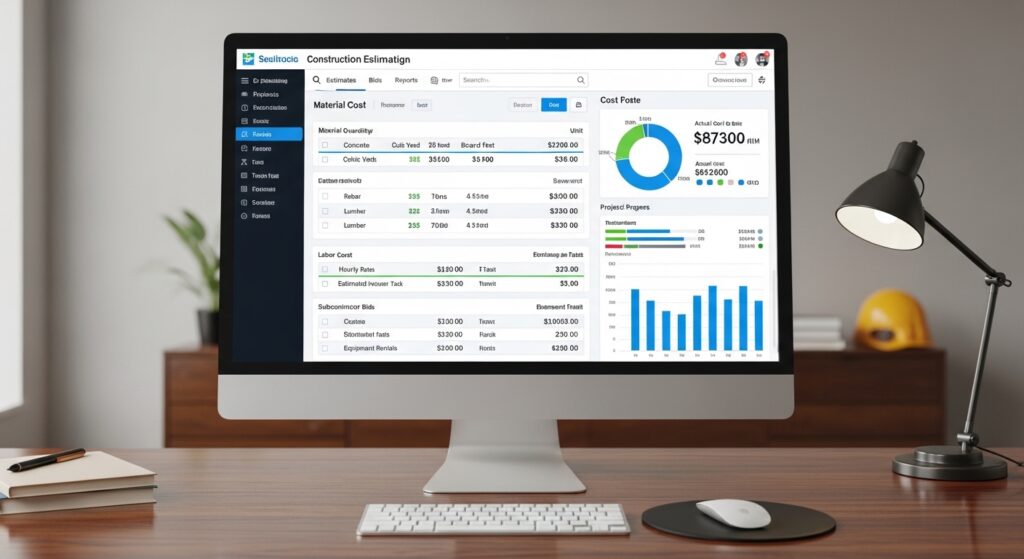
Modern contractors rely on software to improve speed and accuracy.
Common estimating tools include:
- PlanSwift
- Bluebeam
- RSMeans
- CostX
- ProEst
These platforms allow estimators to perform digital takeoffs, track costs, and generate detailed project budgets.
Benefits of Estimating Software
- Faster takeoff calculations
- Reduced manual errors
- Cost database integration
- Improved bid accuracy
Despite advanced tools, experienced estimators are still essential for interpreting drawings and identifying project risks.
Why Accurate Construction Cost Estimating Matters
Accurate estimates directly affect a contractor’s profitability and project success.
1. Competitive Bidding
Contractors must balance competitive pricing with profitability.
Underestimating costs can lead to losses, while overestimating can lose bids.
2. Project Budget Control
Reliable estimates help project managers monitor costs throughout construction.
3. Risk Reduction
Detailed estimates identify potential risks such as:
- material price fluctuations
- labor shortages
- design changes
4. Better Project Planning
Accurate cost data supports scheduling, procurement, and resource planning.
Many developers and contractors use commercial estimating services or residential estimating services to improve bid accuracy.
Challenges in Construction Cost Estimating
Even experienced estimators face challenges such as:
Fluctuating Material Prices
Global supply chains often cause price changes for materials like steel and lumber.
Incomplete Construction Drawings
Missing details can result in inaccurate quantity takeoffs.
Labor Productivity Variations
Labor costs depend on project complexity and worker experience.
Scope Changes
Design changes during construction can significantly impact costs.
Professional estimators mitigate these risks by maintaining updated cost databases and historical project data.
Conclusion
Construction cost estimating is a critical process that determines project budgets, bid competitiveness, and contractor profitability. By analyzing construction drawings, performing detailed quantity takeoffs, and calculating labor and material costs, estimators produce reliable project budgets.
Contractors who use structured estimating processes, modern software tools, and professional estimating support can significantly improve their bid accuracy and project outcomes.
Accurate estimating ultimately helps contractors win more projects while protecting profit margins.
FAQ Section
What is construction cost estimating?
Construction cost estimating is the process of calculating the total cost of materials, labor, equipment, and overhead required to complete a construction project.
Why is construction cost estimating important?
Accurate estimates help contractors prepare competitive bids, manage project budgets, and avoid financial losses during construction.
What are the main steps in construction cost estimating?
The typical steps include:
- Reviewing construction drawings
- Performing quantity takeoffs
- Calculating material costs
- Estimating labor expenses
- Adding equipment and subcontractor costs
- Including overhead and profit
What software is used for construction estimating?
Popular tools include PlanSwift, Bluebeam, RSMeans, CostX, and ProEst.
Do contractors outsource construction estimating?
Yes. Many contractors outsource estimating to professional firms that provide detailed takeoffs and cost analysis to improve bidding accuracy.
Resources
U.S. Bureau of Labor Statistics
https://www.bls.gov
National Institute of Building Sciences
https://www.nibs.org
American Society of Civil Engineers
https://www.asce.org
Engineering News-Record
https://www.enr.com
Author Bio
Phoenix Estimations Team
Phoenix Estimations is a professional construction cost estimating company providing quantity takeoff, material takeoff, and estimating services for contractors, developers, and architects across North America. Our expert estimators help construction professionals prepare accurate bids, reduce cost overruns, and improve project planning.